
This is an article with educational information about Intellectual Property.
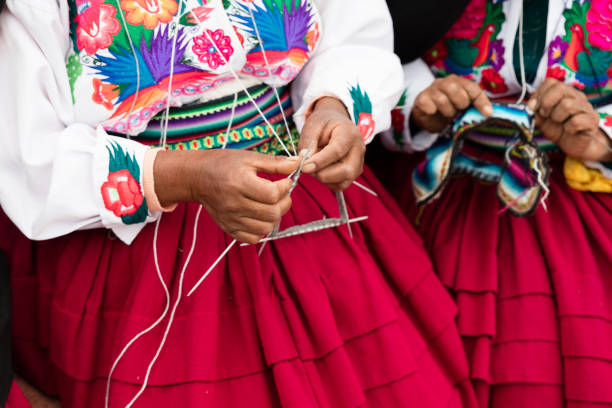
From a cultural perspective, traditional knowledge is considered collective knowledge, from which all kinds of practices, experiences, methods, symbols and signs, ancestral or local knowledge, and cultural expressions are derived, originating from the peoples, nationalities and communities that have been developed and transmitted from generation to generation.1
Given this first consideration, it is important to highlight that over the years the concept of the traditional and cultural has not been respected, especially by manufacturing industries that have wanted to take advantage of the knowledge or expression of various cultures from different countries, whether from pharmaceutical, artistic, textile, among others.
In this sense, it is common in the textile industry, especially fashion companies, to culturally appropriate symbols and signs that come from distinctive expressions of a people, nationality or community, to attach them to a garment, accessory, or for marketing and advertising purposes, thus taking advantage of it to profit without giving any recognition to said community, as in the 2017 fashion week in which the LOEWE brand culturally appropriated figures of the gossips and symbols of the Otavalo people.

Given this, an optimal solution to protect the entire sphere of names, signs, symbols, and all types of indigenous and traditional words can be achieved through the intellectual property regime by means of certification marks, collective marks, or geographical indications, in order to prevent cultural appropriation by companies.
In this way, it is important to safeguard the integrity of all these traditional elements that have been generated and will be generated in the future within Ecuador.
In addition to raising awareness of the need for comprehensive protection, there are currently no defined guidelines regarding cultural appropriation. However, it can be taken into account that, from a constitutional perspective to the regulations of the national and community intellectual property regime, there are mechanisms to safeguard, conserve, and protect what derives from cultural knowledge.
Without forgetting that it is the State's responsibility to ensure the protection of this knowledge in order to achieve the objectives of the development regime.
Bibliography
SENADI. (Accessed December 20, 2023). TRADITIONAL KNOWLEDGE. Retrieved from https://www.propiedadintelectual.gob.ec/conocimientos_tradicionales/