
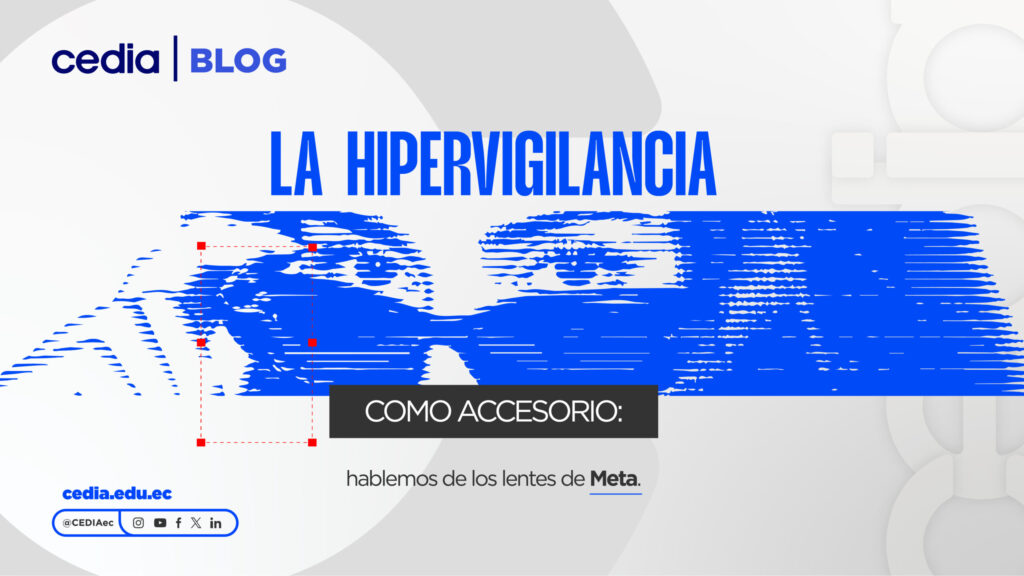
In recent days Kylie Jenner and Meta have generated conversation due to their latest collaboration.
The Meta Starfire Kylie Edition smart glasses not only have the businesswoman's voice integrated into the company's AI, but they are also a bid to transform a technological gadget into a true fashion piece, shifting the conversation away from surveillance and engaging young people in this new technology.
But that hasn't been the only topic of conversation…
From wearable technology to a surveillance tool
Meta's smart glasses integrate cameras, speakers, and artificial intelligence, allowing users to record high-resolution videos, live stream, listen to music, and make voice queries to the company's AI. While these glasses aim to simplify daily life, they also raise privacy concerns.
What was once identifiable as a gadget now goes unnoticed as just another accessory, destroying the boundaries of privacy and consent due to the ease of recording anywhere and generating content about you without you even knowing it.
Although the glasses have a flashing light that indicates that recording is taking place, users say that it usually goes unnoticed during the day and you can even find tutorials on how to hide them.
The truth is, opinions are divided. Some are keen on the convenience the glasses offer, while others argue that the right to anonymity and confidentiality in public spaces will be completely destroyed.
What can we do in the face of this situation?
Although Meta Glasses are a controversial topic, the reality is that this technology is far from disappearing. In fact, they currently dominate the smart glasses market, with production estimated at at least 20 million units this year alone.
While it's now normal to record everything and everyone, that doesn't mean you can't do anything about it if you don't want your image to be shared.
Our recommendation is that you begin to recognize and defend your right to privacy; to do so, it is necessary to educate yourself. In the case of Ecuador, we have the Organic Law on the Protection of Personal Data (LOPDP), which guarantees our right to privacy. This document outlines what is permitted within the legal framework so that you can take appropriate action.
At CEDIA we understand that protecting personal data is protecting people. Through our Personal Data Protection program, we work at an institutional level to ensure that privacy is integrated across all aspects of our member higher education institutions' management, providing them with the capabilities, tools, and specialized support to advance in compliance with the LOPDP (Organic Law on the Protection of Personal Data).