
Working Group on Data Analytics and Artificial Intelligence Applied to Cybersecurity
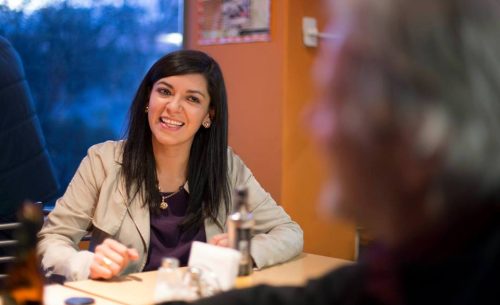
My doctoral studies in France focused on cybersecurity, specifically identity management. More broadly, however, my research also encompasses network management, wireless networks, and open infrastructures. I was a visiting lecturer at the University of Paraná in Curitiba, Brazil, and a member of the Phare and NR2 research teams in France and Brazil, respectively.
Additionally, I was also part of a CEPRA IX project in which we worked on the Optimization of the RSA Algorithm to improve the performance and security level of encrypted messages on the Web; and currently, I am a collaborating researcher in a CEPRA XI project that deals with air pollution measurement.
From my experience in proposing this first Working Group, I can say that it is a very good initiative to be able to carry out long-term work, during which time more value-added products can be proposed to the research, especially by having more universities and stable funding during this period of time, which will allow us to work without falling into problems of administrative processes.
Additionally, as feedback to CEDIA, we can note that there is a lack of formal information, as well as greater dissemination of procedures and regulations that would allow for a clear understanding of each university's participation. Furthermore, CEDIA should strengthen its communication beyond the information available on its website.
Our proposal consisted of forming a Working Group on “Data Analytics and Artificial Intelligence Applied to Cybersecurity” due to the need that Higher Education Institutions (HEIs) face today to counteract the various security attacks that put their information, the availability of their computer systems, the continuity of service and the impact on the institutional image at risk, also considering the new accreditation processes where information security management processes are evaluated.
Based on this premise, the working group proposes an analysis of data analytics methodologies and architectures applied in conjunction with decision support systems, which will allow higher education institutions (HEIs) to take action based on institutional knowledge. The main objective is to strengthen knowledge generation in the use of data mining algorithms and machine learning by analyzing scenarios where they can be most applicable. Furthermore, the group aims to propose a big data and machine learning architecture that can be used by different HEIs on demand without requiring monetary investment. To achieve this, it is necessary to consider security governance within organizations using these new technological solutions, establish communication methods among stakeholders, collaborative processes among organizational security teams, procedures for data collection, aggregation, and analysis, and the management of strategic cybersecurity indicators, taking into account the principles of personal privacy and information transparency.
My greatest expectation is to foster collaborative work and shared leadership as a team. However, it's important to recognize that there will always be initial challenges in forming an interdisciplinary research team, including team building, work processes, administrative aspects, and more. The entire team also has high expectations due to the ambitious and interesting nature of the research topic, with the primary goal undoubtedly being the success of this project, considering its impact and significant contribution to higher education institutions.
Increasingly, it is essential that university professors not only focus on teaching but also conduct research. However, the recent surge in research continues to be limited by financial constraints. In other words, despite the support we may receive from higher education institutions, budgetary issues sometimes hinder research efforts.
With this, I would like to highlight initiatives like CEDIA, which has allowed us to enhance the work of Ecuadorian researchers, preventing it from stagnating. We know that today, at the national level, we have an increasing number of academic publications, allowing us to see the work being done in each higher education institution.
Given that the Working Group lasts three years, I envision the sustainability plan being operational within five years, but above all, I am confident that I will have shared this project with the largest possible number of higher education institutions, thus addressing existing security gaps and the lack of funding in many cases. Without a doubt, I will also propose another Working Group.
Yes, I had the opportunity to be a member of the CEDIA from 2015 until February 2018.
Additionally, I was part of two CEPRA projects.
Currently, aside from CEDIA , I am not aware of any other organizations that contribute to the development of research and academia in Ecuador. Personally, I think CEDIA does excellent work, as it has strengthened the relationship between universities in the field of research.
CEDIA is an alternative to the development of research and academia in Ecuador, where the processes are agile, which allows research not to be limited by the excessive administrative processes that sometimes exist in academic institutions.