
This is an article written by the Intellectual Property and Privacy Area, with an educational focus.
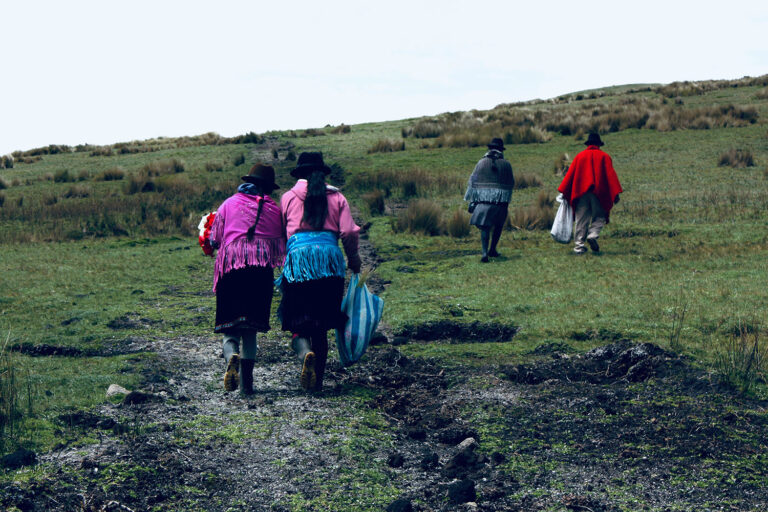
The protection of traditional knowledge through universities within the framework of intellectual property is a highly relevant issue, given that these institutions can play a crucial role in the preservation, documentation and management of this knowledge, since they have an essential role in generating knowledge, being management entities and promoters of innovation.
In light of this, it is necessary to understand what traditional knowledge (TK) is, since for the World Intellectual Property Organization (WIPO), TK constitutes a living body of knowledge that has been created, maintained, and transmitted from generation to generation. At the same time, the Intellectual Property Code states that it encompasses all collective knowledge, such as practices, methods, experiences, skills, signs, and symbols belonging to peoples, nationalities, and communities that form part of their cultural heritage and have been developed and updated. Traditional knowledge includes, among other things, ancestral and local knowledge, the intangible component associated with genetic resources, and traditional cultural expressions.
In accordance with the above, the legitimate possessors have the power and the exercise in decision-making regarding the CCTT, and thus, the exercise of collective rights over these traditional knowledge are exclusive to them, rights that enable the legitimate possessors to grant access, use and exploitation to third parties.
However, such access, use and exploitation must have the prior, free and informed consent of their legitimate holders to authorize a third party. This request must establish a fair and equitable distribution of both monetary and non-monetary benefits, without neglecting the fact that the interested party must respect all collective rights, maintain confidentiality of the information provided, and also motivate and explain the purposes, risks, implications, future applications and more about these collective rights.
Once the application has been granted and registered with SENADI, a contract will be signed establishing the terms and conditions regarding the use, access or exploitation of the CCTT, which must also be registered with the competent authority.
Consequently, when universities conduct research focused on traditional knowledge, they must consider all the points mentioned to keep traditional knowledge protected and, at the same time, prevent higher education institutions from being sanctioned.
LINKAGE OF THE CCTT WITH THE ACADEMY
Through research projects at universities, researchers can work directly with indigenous and local communities to collect and record this knowledge, ensuring its preservation for future generations.
Even collaboration between universities and Indigenous communities can have a significant impact on local communities and society at large. Higher education institutions can create databases that securely store this knowledge and make it accessible to the communities that generated it. This ensures that knowledge is available for future research while maintaining appropriate controls over what type of information is preserved and who can access and use it, thus preventing misappropriation and cultural infringement. This collaboration with communities can also guarantee their active role in managing intellectual property rights over the traditional knowledge originating from their culture.
Universities, in turn, must establish internal protocols and/or policies to ensure that any research on traditional knowledge is conducted with the prior informed consent of the communities involved. This guarantees that the rights and wishes of the communities are respected and not violated, and that any subsequent use of the knowledge is aligned with their interests.
On the other hand, the Academy can be linked and act as a connecting entity with communities in cases where traditional knowledge results in or leads to more forms of intellectual property; universities can serve as intermediaries to manage technology transfer, ensuring that the communities involved obtain recognition and economic benefits.
Conclusion.-
Universities, with their academic, economic, legal, and research resources, are uniquely positioned to support the protection of traditional knowledge within the framework of intellectual property. By working closely with communities, documenting and preserving knowledge, and developing tailored intellectual property models, universities can ensure that these valuable cultural resources remain protected and accessible for future generations, while respecting and empowering the communities that have kept them alive.
Author: Attorney Sofía Gómez.