
This new training will be conducted in person in Quito
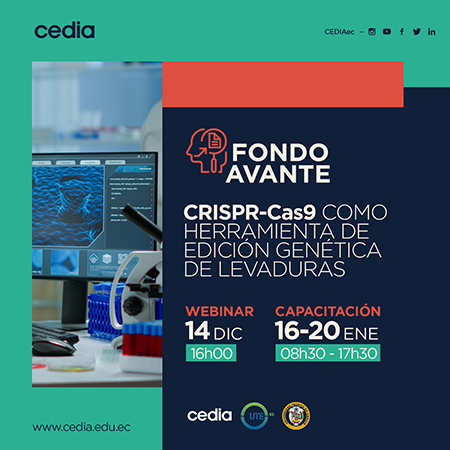
Genome editing is a group of technologies that give scientists the ability to change an organism's DNA. These technologies allow scientists to add, delete, or alter genetic material at specific locations in the genome. Several approaches to genome editing have been developed, one of which is the CRISPR-Cas9 system.
This tool has rapidly gained popularity in the scientific community because it is faster, cheaper, more precise, and more efficient than other existing genome editing methods. Furthermore, the increasing characterization of this tool has allowed its application to be extended to other sectors, such as healthcare and the production of medicinal compounds. Similarly, in the industrial sector, editing microorganisms like yeast has enabled cost reductions and increased efficiency in the production of compounds such as biofuels, industrial agents, and agriculturally important phytochemicals.
This training program will cover the fundamental concepts and principles of gene editing, to help professionals with different approaches and interests in the areas of biotechnology or medicine to integrate this new knowledge for the development of new products and technologies.
Face-to-face training
• Dates: January 16-20, 2023
• Time: 8:30 a.m. to 5:30 p.m.
• Location: UTE Western Campus (Quito), Biomedical Research Center (CENBIO)
• Registration link